Clinical Skills
Tonometry & IOP Measurement
2 lessons·Intermediate·AAO/IJCAHPO Standards
1
Principles of Tonometry
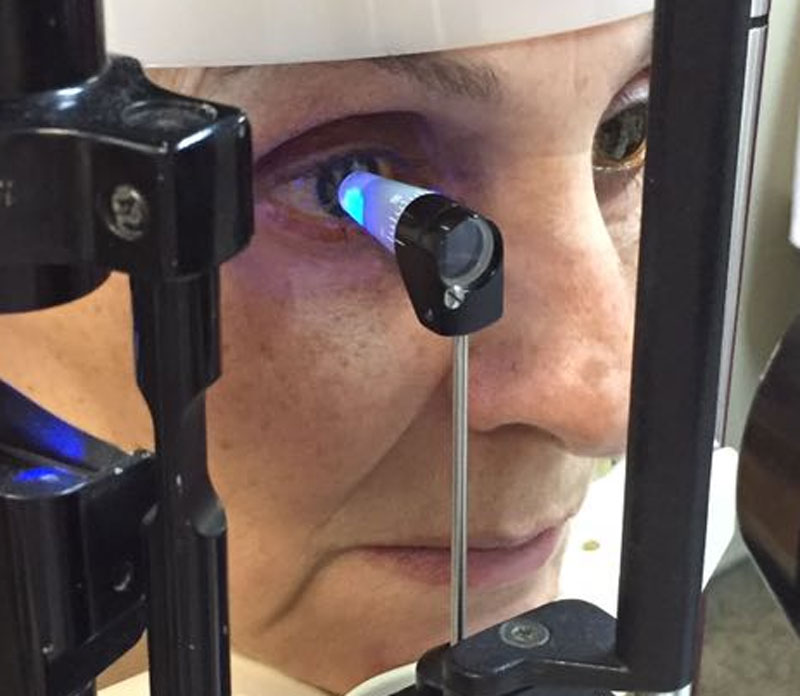
Intraocular pressure (IOP) is the fluid pressure inside the eye, normally ranging 10-21 mmHg. IOP measurement is essential for glaucoma screening and management. The Imbert-Fick principle states that the pressure inside an ideal sphere equals the force needed to flatten its surface divided by the area flattened (P = F/A). Goldmann applanation tonometry (GAT) is the gold standard, flattening a 3.06mm diameter area of the cornea. Central corneal thickness (CCT) affects IOP readings: thicker corneas overestimate and thinner corneas underestimate true IOP.
Key Points
- Normal IOP: 10-21 mmHg
- Imbert-Fick principle: P = F/A
- GAT flattens 3.06mm diameter corneal area
- CCT affects readings: thick = overestimate, thin = underestimate
- Average CCT: ~545 μm